
 Blog
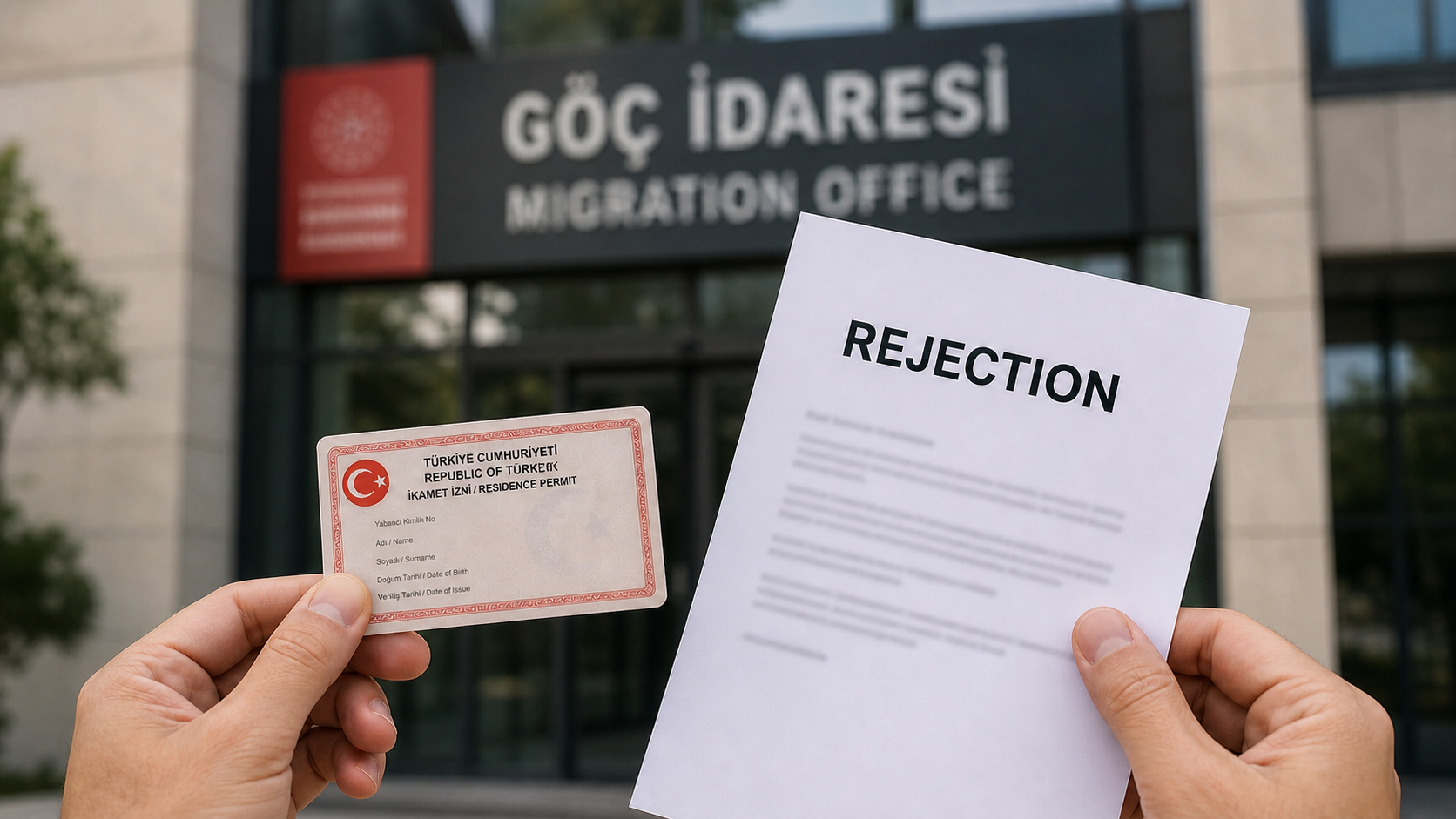
BlogA residence permit rejection in Turkey should be treated as a legal file, not only as a disappointing online result. The decision may relate to address, insurance, financial evidence, purpose of stay, missing documents, previous overstay or a mismatch between statements and records.
The first step is to read the rejection reason and deadline. A new application, administrative objection or court action may be possible, but the correct route depends on the decision and the applicant’s current status.
Contents
1. Short Answer
After a residence permit rejection, the applicant should check the written decision, deadline, reason and current stay status before leaving Turkey, filing a new application or starting a court process.
2. Common Reasons for Rejection
A residence permit refusal is usually not caused by one missing paper alone. The administration may look at purpose of stay, address, income, insurance, entry history and whether the documents support a credible temporary stay in Turkey.
Common reasons include weak address evidence, invalid or unsuitable insurance, insufficient financial explanation, unclear purpose of stay, missing original documents, irregular entry-exit history or problems with the rental file.
3. Deadlines and Status
The deadline should be checked immediately because the legal position can change quickly after notification. Appeal, objection, departure planning and a possible new application should be assessed before the applicant loses time.
The deadline matters because some remedies are time-limited. The foreigner should also understand whether the rejection affects lawful stay, exit requirement, overstay fine or future entry risk.
4. New Application or Legal Challenge?
A new application is not always better than challenging the refusal. If the same address, income or purpose problem remains, a new file may simply repeat the weakness that caused the first refusal.
A new application may work when the problem is correctable and the applicant is still eligible. A legal challenge may be needed when the decision is legally weak or the applicant cannot solve the issue by simply resubmitting documents.
5. Documents to Review
The repair work should be documentary. Lease records, address registration, bank statements, insurance, family records, entry-exit history and written explanations should be reviewed as one residence file.
The file should include the application form, appointment record, rental contract, address registration, insurance, financial documents, passport, entry records, previous permits and the written rejection notice.
6. Deadline and Repair Strategy
A residence permit rejection should be read through the reason stated in the decision and the documents that were actually submitted. The legal response may be different where the problem is address evidence, health insurance, financial explanation, missing translation, previous overstay, suspected non-genuine stay or timing.
The first practical issue is the deadline. A foreigner should not treat a rejection as only an administrative disappointment, because exit timing, lawsuit period, new application strategy and future entry risk may all depend on the date of notification.
The file should also show whether the problem can be repaired. Some cases require a clearer address and document set, while others require a legal challenge because the authority's reasoning does not match the evidence in the file.
7. Legal Istanbul Review
A legal review should identify the reason, deadline and best route before action is taken. Repeating the same weak file may lead to another rejection and may increase future risk.
A rejection should not be answered with panic or with a copy of the same file. The applicant should first identify whether the problem is factual, documentary or legal. A factual problem may involve address or income. A documentary problem may involve insurance, translation or missing original. A legal problem may involve purpose of stay, previous violation or administrative assessment.
The decision also affects timing. If the applicant remains in Turkey after the legal period, overstay fines or future entry issues may arise. If the applicant leaves without understanding the reason, a later application may repeat the same weakness. The file should therefore be reviewed before choosing between exit, new application or court route.
For families, property buyers, students, remote workers and long-term visitors, the reason for stay should be supported by documents that fit the declared purpose. A residence file becomes stronger when address, finance, insurance and personal circumstances speak the same language.
Applicants should also avoid relying only on general explanations such as tourism, remote work or property ownership. The administration usually looks at whether the documents make the purpose credible. A concise but coherent file is stronger than a large file that does not answer the real concern.
A refusal file should also be checked for whether a new application, administrative objection or court case is the correct next step. These routes have different timing, evidence and practical effects, so the choice should be made after reading the refusal reason and the applicant's current stay position together.
For foreign applicants, the most useful preparation is usually a clean timeline. Entry date, residence history, address record, insurance, financial evidence, family connection and previous immigration decisions should be placed in order before a response is prepared.
Frequently Asked Questions
Can I apply again after rejection?
Sometimes yes, but the reason for rejection should be corrected first.
Can I sue against the rejection?
Court action may be possible within the relevant deadline.
Does rejection create an entry ban?
Not automatically, but overstay after rejection may create fines or restrictions.
Should I leave Turkey immediately?
The decision and current status should be reviewed before making a travel decision.
Consultation for Residence Permit Matters in Turkey
Send your questions and the essential facts to Legal Istanbul. We will review your message and reply with a free initial response about the next step.